full
Why Intention and Intuition Aren't Soft Skills: A 40-Year Business Owner's Take with Steve Barton
Strategy, systems, and spreadsheets matter. They're not the whole story. This BizBlend conversation is for founders, leaders, and entrepreneurs who can feel that something is quietly off, even when the numbers look fine on paper. The team meetings run long, the decisions feel heavier than they should, and the version of business success you were promised never quite arrives.
Host Sana sits with Steve Barton, certified gestalt mindset coach, creator of the trademarked Game of 10® methodology, and a man who spent four decades inside a family business before turning his lived experience into a coaching practice. Together they unpack why intention and intuition aren't woo-woo, why overthinking is the most expensive habit in business, and what it actually means to lead from a centred, present place.
About the Guest:
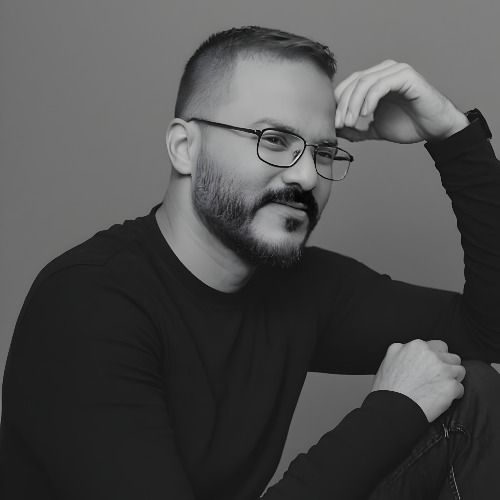
Steve Barton is a certified gestalt mindset coach, graduate of the Gestalt International Study Center, and a graduate of Marianne Williamson's Miracle Minded Coaching program. He is the founder of Steve Barton Coaching and creator of the trademarked Game of 10® methodology. Before coaching, Steve spent over 30 years growing his family's floral business, and he presented the Game of 10® process to the Harvard Business School Case Study Team in 2025. He is co-author of The Father, The Son, and the AHA Moment with his son Spencer Barton.
Key Takeaways:
- Overthinking is the most expensive habit in business. Anxiety, self-doubt, and decision fatigue are the price of letting thoughts run the room instead of the other way around.
- An ideal business has three things in alignment. Happy customers, happy employees, and a profitable bottom line. When one of the three is off, the cracks are already forming.
- Intuition is not a guess. It's clear knowing. It shows up when overthinking quiets down enough for clarity to come through.
- Intentions need to be driven by passion. On a scale of 1 to 10, if your daily work isn't a 10, the question isn't how to push harder, it's whether you're on the right path.
- Be, do, have at "enough." I am enough. I do enough. I have enough. The universal quantity isn't more — it's enough.
- Pareto holds in real life. Roughly 20 percent of your clients drive 80 percent of the business. Ignore them at your peril.
- The internal shapes the external. A wealthy mindset attracts wealth. A scarcity mindset attracts scarcity. Personal development is the cheapest, highest-return investment a leader can make.
Connect With the Guest:
- Website: https://www.stevebartoncoaching.com
- LinkedIn: https://www.linkedin.com/in/coach-steve-barton/
- Book — The Father, The Son, and the AHA Moment: Available via Steve's website and major retailers.
SECTION 6 — Episode Chapters
[00:00] The missing piece isn't in your business plan — it's already inside you
[03:30] Meet Steve Barton — 40 years, a family floral business, and a spiritual awakening
[09:00] Why we dismiss intention and intuition — and what it costs us
[14:00] Overthinking as the most expensive habit — anxiety, self-doubt, decision fatigue
[16:00] What an ideal business actually looks like — customers, employees, profit in alignment
[20:00] The cracks beneath the surface — fear, self-doubt, guilt, and shame
[22:00] The six phrases — declarations of innocence and "enough"
[26:00] The Game of 10 explained — passion, intention, intuition
[30:00] Pareto's law and the 20 percent that pays the bills
[33:00] Where to start — personal development as the highest-return investment
[36:00] The aha moment — when 80 percent is letting go and 20 percent is following through
🎙️ Want to Be a Guest on Healthy Mind, Healthy Life?
Send me a direct message on PodMatch.
👉 DM Me Here: https://www.podmatch.com/hostdetailpreview/avik
🌱 About Healthy Mind By Avik™️
Healthy Mind By Avik™️ Global Mental Wellness Podcast Network - focused, credible, no more identity clutter.
👉 Subscribe and be part of this healing journey.
Refer a Guest
Know someone who would be a great fit for one of our podcast shows? Email us at services@podhealth.club with the subject line “Refer a Guest.” Requests without this subject line cannot be catered to.
Support Our Podcast: Support this Podcast
📬 Contact & Links
Brand: Healthy Mind By Avik™️
Based in: India & USA
📌 Disclaimer - This episode is produced for educational and informational purposes only. All views expressed by the guest are their personal opinions alone and do not represent the views of the host or Healthy Mind by Avik™. The Network does not verify, endorse, or assume responsibility for any guest statements. Nothing in this episode constitutes medical, legal, financial, or professional advice, please consult a qualified professional before making any decisions. Listeners are encouraged to engage critically and independently with all content do not consume blindly. Use this content as a starting point for your own reflection and research, not as a substitute for professional guidance. Third-party content is referenced under fair use for informational purposes only. Guest speakers are solely responsible for their own statements.
If you have concerns about any content, please contact us here
By listening, you acknowledge and accept this disclaimer in full. Read detailed disclaimer here.
#podmatch #healthymindbyavik #podhub.club #BizBlend #IntentionalLeadership #IntuitionInBusiness #GameOfTen #MindsetCoaching #ConsciousBusiness #SteveBarton #FounderMindset #HumanFirstLeadership #PersonalDevelopment #BusinessAlignment #LeadFromWithin
Transcript
Sana: Most of us were taught to build a business on a strategy.
81
::Sana: Systems?
82
::Sana: Spreadsheets?
83
::Sana: I mean, yeah, listeners, those things absolutely matter. I'm not saying they don't matter.
84
::Sana: But then… Just imagine, like, what if the missing piece wasn't in your B plan?
85
::Sana: What if it was already inside you?
86
::Sana: Well, today we are going to explore something that, you know, even the world's most effective leaders, they are actually, but quietly, leaning into.
87
::Sana: Intention and intuition. Not as concepts.
88
::Sana: as actual business tools. Stick with us, listeners, because this one is going to be really, really interesting and worth listening to. So welcome back, everyone, to BizBlend, the show, yes, where we not just explored the business side, but the human side of business.
89
::Sana: Growth and purpose, actually living together.
90
::Sana: I'm Suna, your host, and I'm so glad, listeners, you have made time for this conversation today, because I'm sitting with someone. Well, he's a certified gestalt mindset coach, creator of the trademarked Game of 10 coaching methodology, and someone
91
::Sana: Who has spent over 4 decades, listeners, 4 decades helping business owners, executives, and entrepreneurs build more intentional, intuitive.
92
::Sana: And purpose-driven careers and companies.
93
::Sana: He even presented his process to the case study team at Harvard University in 2025, yeah. So, today we are talking about why intention and intuition aren't soft skills.
94
::Sana: They might be just the most important ones in your business. So, listeners, let's welcome our incredible, esteemed guest, Steve Barton. Steve, welcome to the show. I am really, really honored having you here with us.
95
::Steve Barton: Well, thank you very much for that kind introduction, and I hope I live up to your standards, and that's my.
96
::Sana: and…
97
::Steve Barton: and I'm using my intuition to go for it. So, let's begin.
98
::Sana: Absolutely, Steve, and I'll be very honest, it's really, really inspiring, because forget about the tools, or the skills, or, you know, everything technical, but
99
::Sana: The experience in there,
100
::Sana: You know, 40 years, and
101
::Sana: I think, you know, it is really, really worth inspiring to, because not only the good, but the bad, you know, the ups and downs, the highs and lows, I think
102
::Sana: those experiences and the lift experiences, you know, they are really, really worth, you know, to listen to, to learn. So, definitely, I'm really excited, personally, Steve. So before we… before we get into the meat of AIR,
103
::Sana: I would love to start with something personal here. I mean,
104
::Sana: all over these 40 years, at some point along the way, did you have a moment where you… you realized intention, intuition.
105
::Sana: You know, these weren't just, philosophical ideas, or something that could be discussed only in the spiritual circles, or, you know, like, they were actually changing outcomes.
106
::Steve Barton: Yeah, it's, 3 to 3 years ago, I did have a… spiritual awakening.
107
::Steve Barton: And it took me a while to get myself back to the real… the quote-unquote real world.
108
::Steve Barton: And…
109
::Steve Barton: And I didn't want to be considered woo-woo, or weird, or crazy, as it sounds when you have an awakening.
110
::Steve Barton: So, I think that… I mean, I am pretty ground… I think you have to be grounded.
111
::Steve Barton: A lot of people who do have these awakenings, don't ground themselves into who we are. We are…
112
::Steve Barton: We have intentional, intuitive… Spiritual beings having a physical experience on this planet.
113
::Steve Barton: That is pretty much it. That's the… that's the equation, that's the, mathematical equation, that's the…
114
::Steve Barton: actual reality of who we are, so how do we incorporate that into relationships, into business? Business is a relationship. People that don't put those two together don't… they miss half the battle, too. And…
115
::Steve Barton: So, yeah, so let's, ask me some questions there, Sana.
116
::Sana: I love that sleep. I love food.
117
::Sana: Okay, so let's start with something I think, you know, a lot of business people,
118
::Sana: maybe, you know, they're here and they quietly dismiss. So, and this is something, you know, which kind of connects with what you just shared. When someone says, okay, lead with intention, trust your intuition, I mean, if I look back, you know.
119
::Sana: some of the business lessons or, you know, books and education. I think,
120
::Sana: at the very basic level, I don't think, you know, it very aggressively touches upon these aspects, but then there's often this eye-roll response, like, it's too soft or too spiritual, something you mentioned, you know, I wouldn't want to be considered as woo-woo. Like, too far from the bottom line.
121
::Sana: What do you think, what are we getting wrong when we write these things off so quickly?
122
::Steve Barton: What we're getting off is the right side of the brain. We're taught… with the left side of the brain, we're taught to think.
123
::Steve Barton: You know, how many times as a child were you taught to, what are you thinking? You know, think before you do that. Think, think, think. Well, the biggest addiction in the world is overthinking.
124
::Sana: No.
125
::Steve Barton: Yep. And what overthinking does, the benefits of overthinking are overthinking, anxiety, depression, fear, self-doubt, guilt, and shame. So, those are the best outcomes of
126
::Steve Barton: Having thoughts take you over.
127
::Sana: I do agree with you, you know, overthinking…
128
::Sana: Because I have personally, many times, you know, struggled with that, and yes, I'll also… I definitely agree with you, like, you know, more than giving solutions.
129
::Sana: It just, you know, keeps you, stuck.
130
::Sana: deeper and deeper within, within, you know, that problem, or that, you know, rabbit hole that, you know, you feel yourself.
131
::Sana: And also, do you think, Steve, that, you know, this, resistance, especially the way, intuition or intention, they are perceived in the business circles, does it say…
132
::Sana: Something specific about the way most of us were trained to think. Like, what an ideal business would look like.
133
::Steve Barton: An ideal business looks like your customers are happy, your employees are happy, and your business is profitable.
134
::Steve Barton: That is the ideal business. It's in a casino, it's all the three cherries in a row. So, you know, it's all about being happy.
135
::Steve Barton: And you have to be intentionally happy, because that's who we are. We are happy in our innate 10, the game of 10. We are happy, healthy, abundant, or wealthy, healed.
136
::Steve Barton: And whole human beings.
137
::Steve Barton: And do we make mistakes? Yes. Do we get disappointed? Yes. So, we're appointed 10.
138
::Steve Barton: And in our life, in everyday life, in past, we've been disappointed, and some people get stuck in that lower level of awareness. 10 is pure conscious awareness.
139
::Steve Barton: And it can be assimilated into your everyday life.
140
::Steve Barton: And, if you… we don't let go, aka forgive.
141
::Steve Barton: the past thoughts about… keyword is thoughts about what happened to us, who did it to us. If we don't let those
142
::Steve Barton: thoughts about the person, places, and situations that happen to us, we remain stuck from that level of awareness.
143
::Steve Barton: 1 through 9, I call that the game often played.
144
::Sana: Okay.
145
::Sana: Interesting, interesting. But, before we, you know, because you've now mentioned about the game often, I'm personally also curious to explore more about it, but then before that,
146
::Sana: let's, let's look at the roots of it. You know, when you, Steve, work with someone, let's say, who has been,
147
::Sana: grinding very hard. You know, they have built something.
148
::Sana: On paper, they are successful, but then, deep down, you know, it's kind of this… there's this disconnect or misalignment.
149
::Sana: what are you usually finding, you know, underneath that? Like, what does a life or business that is operating without real intention actually look like from the inside?
150
::Steve Barton: It looks like chaos, it looks like disorder, it looks like… it might look good on the outside, it might have profitable, they might… it's not… it's usually… it can be profitable, but typically the employees are not happy, and the.
151
::Sana: customers.
152
::Steve Barton: may be happy. Somebody's… somebody's out of… something's out of alignment somewhere in those three factors. The customers, typically it's the employees.
153
::Steve Barton: And if a customer is too much… if an employer is too much focused on customers and not their employees, you're gonna have a, dysregulated, business. It may look good on paper, but…
154
::Steve Barton: If your employees are not happy, and they're not telling people how… what a great place it is to work, you're gonna have a lot of turnover, you're gonna have
155
::Steve Barton: of, disgruntled employees, you may have lawsuits, you may have…
156
::Steve Barton: Accidents, quote-unquote. You may have.
157
::Sana: Mom.
158
::Steve Barton: a lot of out-sick people, things like that. So, and then the… and then the employer…
159
::Steve Barton: Oftentimes doesn't know how to delegate, or to let go of the control, or have a succession plan. And they really aren't happy in their job, and anybody who's not happy is going to
160
::Steve Barton: They've shared that unhappiness with typically their employee.
161
::Steve Barton: or ease versus their customers, so it's just… it doesn't… It's not a pleasant environment.
162
::Sana: Hmm.
163
::Sana: And, you know, I also think, Steve, just to add on to it.
164
::Sana: I think it's like, you know, if I can use the analogy in there,
165
::Sana: Like, in the worst of your times, how…
166
::Sana: you are holding yourself, and you know, I'm just using or looking at this from an individual perspective.
167
::Sana: in the worst or the most challenging of the times, you know, people say, like, if you have a rock-solid foundation, that helps you to hold steady, because, you know.
168
::Sana: our natural way of reacting, like, even if everything is looking good outside, would be that, you know, we give up, to that situation. And I think similarly, let's say if, you know, a building has a rock-solid foundation, it can still survive
169
::Sana: the harsh weather, you know, sometimes the unfavorable circumstances. So I think what you are pointing at, you know, is this…
170
::Sana: The foundation, those cracks,
171
::Sana: Can, you know, they may not reveal themselves in the good times, but when, you know, we have a crisis or challenging times, these cracks, they now, gradually, they reveal themselves, either gradually or maybe at, you know, all of them together at once.
172
::Steve Barton: Exactly. Those cracks usually are based on fear, fear of loss, fear of… Self-doubt.
173
::Steve Barton: Guilt and shame. Those are the cracks. And they do appear if the foundation has not been, secured. Poured with great materials that don't crack.
174
::Steve Barton: But the cracks can be removed, and the cracks of our psyche can be removed as well. And those are… I created 6 phrases. If you want me to share it with your audience, I'd be glad to.
175
::Sana: Please, please go ahead, Steve.
176
::Steve Barton: Alright, so… These phrases go for yourself.
177
::Steve Barton: And everyone else. So, I think a lot of people are better to other people than they are themselves.
178
::Sana: Hmm.
179
::Steve Barton: So, we'll start. And when I say that I am 10, it means I'm an aspect of that source energy.
180
::Steve Barton: Divine, and it's…
181
::Steve Barton: special, very special, very not special. We are… we are human beings, having a physical experience. So, I am 10.
182
::Steve Barton: I'm doing the best that I can with the awareness that I have.
183
::Steve Barton: I'm always right with the awareness that I have.
184
::Steve Barton: I am enough.
185
::Steve Barton: I do enough.
186
::Steve Barton: And I have enough.
187
::Steve Barton: The first phrase is a declaration of who we are.
188
::Sana: Second.
189
::Steve Barton: Two phrases.
190
::Steve Barton: I'm doing the best I can with the awareness I have, and I'm always right with the awareness I have. Those are declarations over our innocence.
191
::Steve Barton: The next three phrases are, I am enough, I do enough, I have enough.
192
::Steve Barton: And that is the I am, I do, and I have.
193
::Steve Barton: the be, do, have of every moment that we exist here. We are being, doing, and having. And a lot of people don't understand what the universal
194
::Steve Barton: Quantity is.
195
::Steve Barton: And the universal quantity is enough.
196
::Sana: Hmm.
197
::Steve Barton: Infinite enough.
198
::Sana: Yeah.
199
::Sana: Yeah.
200
::Sana: And this really makes me, you know, recollect, recently I recorded another episode on Bisplant, you know, stressing on the power of, words, you know, how you communicate with yourself.
201
::Sana: Because, you know?
202
::Sana: It… it… you… you cannot actually realize, but then, the way that you communicate yourself, the way you see yourself.
203
::Sana: It projects in, you know, how you are either reacting, or what you're doing, or, you know, the approach that you're putting, whether it's, you know, in your business or your, you know, personal life as well.
204
::Steve Barton: Yes. If you… here's the way I look at it, and what I know.
205
::Steve Barton: And the intuition is knowing, it's not thinking, you know. So if someone said to you, do you think you know, or do you truly know? I'll go with the… if someone said, I truly know this, fine. I'll go with that one versus, I think I know. So, what I know is we are…
206
::Steve Barton: Unconditionally… we are conditioned, but in our 10-state, in our appointed state, we are unconditioned, loving beings.
207
::Steve Barton: So, the key is to get rid of the conditionings, I call them terms and conditions, that we've placed on ourselves and others.
208
::Steve Barton: And then we pushed the green button and said, agree. So, whether we knew it or not, you know, I'll be happy when. Agree! No, you won't. So it's funny how business and,
209
::Steve Barton: Personal development are very similar, and the words we do use and the contracts we do make with ourselves and others, do have an effect on our business life and our personal life.
210
::Sana: Absolutely, absolutely.
211
::Sana: And Steve, with that, let's get to understand, the game of, 10. What exactly it is, and, you know, how does it all fall into this realm of business, especially when we are talking about intention and intuition?
212
::Steve Barton: We'll think of intentions as our purpose, our goals.
213
::Sana: Okay.
214
::Steve Barton: And…
215
::Steve Barton: For the listeners out there, whatever you're doing, ask yourself, on a scale of 1 to 10, how passionate are you about what you're doing on a daily basis?
216
::Steve Barton: And if it isn't 10, can you get it to 10, or do you need to get onto a different…
217
::Steve Barton: different path.
218
::Steve Barton: And if so… make a… start to plan on getting onto your passion. What is your true passion?
219
::Steve Barton: Because you will succeed, and you will have success. Will it be easy? No. I promise everyone it will not be easy. Will it be worth it? Yes. So…
220
::Steve Barton: There's that. So, intentions have to be driven by passion.
221
::Steve Barton: And if you can get that passion to 10…
222
::Steve Barton: Put off a checkmark. That's done.
223
::Steve Barton: With intentions, at 10, you become intuitive.
224
::Steve Barton: By being in intuition is also without thought, it's awareness. Once we've used the thoughts.
225
::Steve Barton: Not have the thoughts use us.
226
::Steve Barton: Our minds are clear to basically download.
227
::Steve Barton: from Source Energy, whatever you want to call it,
228
::Steve Barton: What is needed to support those goals?
229
::Steve Barton: Those… that… your purpose, your mission, Your… desires.
230
::Steve Barton: the universe will support you when we get out of the way. And I say we.
231
::Sana: I mean…
232
::Steve Barton: The collective thoughts that are blocking the transmission for situations to
233
::Steve Barton: Basically, fall into your lap, or you… your awareness, oh, there you are, or there it is.
234
::Steve Barton: And you have clear clarity in that.
235
::Steve Barton: And the right people, places, and situations happen.
236
::Steve Barton: And without clear awareness, you don't see it.
237
::Sana: Mmm.
238
::Sana: Also, you know, let's say, you know.
239
::Sana: Because now, if we look at it, you know, in the everyday world of running a business, Steve, you know, the team meetings, the client calls, the… sometimes, you know, the hard decisions about hiring, pricing, direction.
240
::Sana: How does operating without a clear intention actually show up in these ordinary moments? And what does it cost people in ways, you know, they might not be able to have a name for?
241
::Steve Barton: Well, the cost is inefficiency, not being clear in your communications, not being clear with your customers, so you have customer complaints, I didn't ask for that, you misunderstood me, so there's a big cost in it.
242
::Steve Barton: Versus, I know exactly what you're looking for, you know? So having a clear mind, basically the whiteboard, and someone describes to you, I was in the flower business, so…
243
::Sana: I was…
244
::Steve Barton: People said, this is the look I'm looking for, and I have… so I would suggest certain materials to use, the certain flowers that fit that description, certain color palette, things like that. And typically, I'd say 95, 99% of the time, it was perfect.
245
::Steve Barton: So, it's really about listening, having a clear mind and a clear vision.
246
::Steve Barton: and pay attention to, you know, you have a thought in your mind, oh, I gotta call this customer, oh, I gotta go visit this client, I haven't called them, I haven't talked to them or seen them, and they're, you know, 80% of your business is done by 20% of your clients. It's the Paretta's Law that works in a lot of…
247
::Steve Barton: situations and in life. So, if you pay attention to those 20%, 80% of the business is going to be taken care of. And then you develop, other products for the other 80% and keep them happy. But the 20%,
248
::Steve Barton: Are what pays you.
249
::Steve Barton: pays your bills and makes you a profit. So it's… no pun intended.
250
::Sana: Yeah, that's right, that's right. And,
251
::Sana: Steve, you, talk about intention and intuition as things that can be developed. Now, I think this points towards this misconception that, you know, like, it's only for the gifted people out there, you know, people like they are highly intuitive, or
252
::Sana: they're highly self-aware, or they're, you know, they are very clear with intentions. It's like, you know, they become, like, this character, parks, like, almost like muscles. I mean, so for the business owner or leader, you know, listening right now, who actually, they want to build this,
253
::Sana: Where do you, you know, suggest to start? Like, you know, what's the first concrete move?
254
::Steve Barton: I would look into, as Warren Buffett said, to Becky Quick in these states, or if you… He said.
255
::Steve Barton: Becky, the quick said that, Warren, what's… for our first-time investors out there listening, what's… what can you offer them for the best investment?
256
::Steve Barton: And, Warren Buffett said, that's easy, personal development.
257
::Steve Barton: So, read books that offer that. My favorite books are The Power of Now by Eckhart Tolle, A Course in Miracles, any of the spiritual books you read, the Bible, the Quran, the,
258
::Steve Barton: and the other books are all just wonderful books, and use that. And I like to say my coaching is a supplemental insurance. It's not… it's not… you know, if you have… we have AFLAC here in the States, I don't know what you have for supplemental health insurance, but I'm a supplemental health insurance.
259
::Steve Barton: So, definitely get into reading, start reading.
260
::Steve Barton: Books, they've been around, there are… there's thousands of personal development books out there. So start with that. What you're gonna find is they all say the same thing, differently.
261
::Steve Barton: The good ones do.
262
::Steve Barton: And… And it's not… it is the… people oftentimes have to work on their inside.
263
::Steve Barton: And that's what a lot of personal development is. It's internal.
264
::Steve Barton: But the external doesn't change until the internal does, so it becomes flow.
265
::Steve Barton: That what you see is a projection of who you are.
266
::Steve Barton: What you attract is a projection of who you are.
267
::Steve Barton: So, if you are… have a wealthy mindset, what are you going to attract? Wealth. If you have a poverty mindset, what are you going to attract?
268
::Steve Barton: poverty. So, it is a level of awareness
269
::Steve Barton: And I say, if you're in 10, you are intentional.
270
::Sana: That's really powerful, Steve. Really, really powerful. And talking about book, I mean,
271
::Sana: you are also, you know, you are co-author of, I kind of, you know, I'm finding this name very interesting, the father, the son, and the aha moment. You're also, you know, currently writing your next book, of course, for the leaders and professionals out there.
272
::Sana: What would you want, you know, special listeners who may, you know, go and, you know, check out your books as well, to… Of course. Yeah.
273
::Steve Barton: you know, we wrote… I'm writing now in the process of writing the book I wanted to write in the beginning, but my editor
274
::Steve Barton: And I was taking a course on how to write a book, so she said… I told her I wanted to write the game of 10. She said no one would read it. I said, okay. She goes, what else you got? I said, I'm writing it with my 18-year-old son. She goes, okay, it's a parenting book.
275
::Steve Barton: I said, okay. So that's… so there's a twist on… there's a double entendre on these… on the words, the father, the Son, and the aha moment. The aha moment is every time you go from level
276
::Steve Barton: 1 to 2, aha moment, 2 to 3, aha moment, 3 to 4, so forth and so on, and 9 to 10 is the big aha moment.
277
::Steve Barton: The big aha moment is… I don't have to do a thing.
278
::Steve Barton: Meaning, I just have to get out of the way and do what is necessary to complete the
279
::Steve Barton: the task. So yes, you do have to do something, but the heavy lifting is done for you. So you do it… 80% of it's letting go, 20% is… is following through, putting the pieces together, the physical aspect of it.
280
::Steve Barton: But a lot of people take on too much worry. I mean, the worry with this fear, self-doubt, guilt, and shame.
281
::Steve Barton: It's exhausting for people, you know, with anxiety and depression, and overtired, overworked. If they just let it go.
282
::Steve Barton: Easier said than done, because they have to let go of the traumas and the disappointments they have…
283
::Steve Barton: Have pushed the green button on.
284
::Steve Barton: And they made an agreement that work is hard, work has to be difficult, people are… customers are horrible, employees are horrible, I'm horrible. So it must be exhausting.
285
::Sana: Yeah.
286
::Steve Barton: There are people out there, too, like that.
287
::Steve Barton: There we go.
288
::Sana: Yep.
289
::Sana: Yeah, so, Steve, of course, you know, I think, you know, I'm very sure our listeners, they would definitely, definitely, you know, want to explore more around, you know, the game of 10,
290
::Sana: And, you know, they'll definitely think that now I want more of this. So, you know, whether it's the game of 10, or working with you directly, or maybe, you know, staying in your world. So, where's the best place to find you and connect?
291
::Steve Barton: The best place to find me is my website, www.steve Barton Coaching, that's S-T-E-V-E-B-A-R-T-O-N, coaching, C-O-H-C-H-I-N-G dot com.
292
::Steve Barton: get a call with me. I'm… I'm the worst salesperson in the world, and… because I don't want people to buy from me who don't need or want to work with me. So, I enjoy working with the people I do.
293
::Steve Barton: See, find me on LinkedIn, that's where I do a lot of my…
294
::Steve Barton: outreach, and I'm just getting into the podcast scene to get my
295
::Steve Barton: To get my message out there to everyone as a 10, whether you know it or not, and you can't be an 11, and you can't be a 9, you have to be 10 to be in alignment, so…
296
::Steve Barton: Yeah. And for my book, The Father, the Son, the Aha Moment, someone said to me the other day, well, I don't have any children. It's a parenting book. It says, Tools for Helping You and Your Child Develop a Path to Happiness. I don't have any children, but I'll read your book, because I know you and like you. And I said, well, do you have an inner child? And they said, oh, yeah.
297
::Steve Barton: So read it for your inner child, and it's always about healing that
298
::Steve Barton: part of ourselves, that once your inner child is healed.
299
::Steve Barton: That is how you become whole.
300
::Steve Barton: And when you become whole, then the inside and the outside world becomes a much better place.
301
::Sana: Beautiful, Steve. That's so good to know. I really love your honesty. And yes, listeners, I'm going to have all, all the details in the show notes. So, yes, go check out Game of 10, or connect with Steve, go check out his books as well. And Steve, thank you so much, because this has been actually such a…
302
::Sana: rich conversation. You actually, you know, brought depth and honesty to Bizplan today, so thank you so much.
303
::Steve Barton: Thank you so much for having me, and I appreciate it, and thank you.
304
::Sana: And to everyone who joined us.
305
::Sana: Yeah, something in this episode definitely stirred you, I'm very sure it has. Maybe it's a question, or a quiet nudge, or maybe a feeling that, you know, something in you, maybe in your work, it needs to shift. It is worth falling.
306
::Sana: So don't fight it away for later, let it sit with you. But then, yes, do follow the show, keep listening, keep tuning into the Bisplin Podcast.
307
::Sana: This is your host, Senna. I'll be back with another conversation. Thank you so much.